Canvas Rendering Pipeline
This document covers OpenLayers' Canvas-based rendering pipeline, which provides high-performance vector and raster rendering using the HTML5 Canvas API. The pipeline transforms geographic features and geometries into optimized rendering instructions that are executed during frame rendering.
For information about WebGL rendering, see WebGL Rendering System. For general layer architecture concepts, see Layer Architecture.
System Overview
The Canvas rendering pipeline follows a two-phase approach: an instruction generation phase during feature processing, and an execution phase during frame rendering. This separation allows for optimized rendering performance by pre-computing drawing operations and caching them for reuse.
Canvas Rendering Architecture

Instruction-Based Rendering System
The canvas pipeline uses a command pattern where rendering operations are encoded as serializable instructions during feature processing, then executed during frame rendering.
Instruction Flow

Key Data Structures
| Component | Purpose | Key Properties |
|---|---|---|
| SerializableInstructions | Container for rendering commands | instructions, coordinates, textStates, fillStates, strokeStates |
| CanvasInstruction | Individual rendering command | Instruction type and parameters |
| ExecutorGroup | Groups executors by z-index | executorsByZIndex_, maxExtent_, resolution_ |
| Executor | Executes instructions for specific geometry type | instructions, coordinates, pixelCoordinates_ |
Builder Pattern for Geometry Rendering
The canvas pipeline uses specialized builder classes to convert different geometry types into optimized rendering instructions.
Builder Class Hierarchy

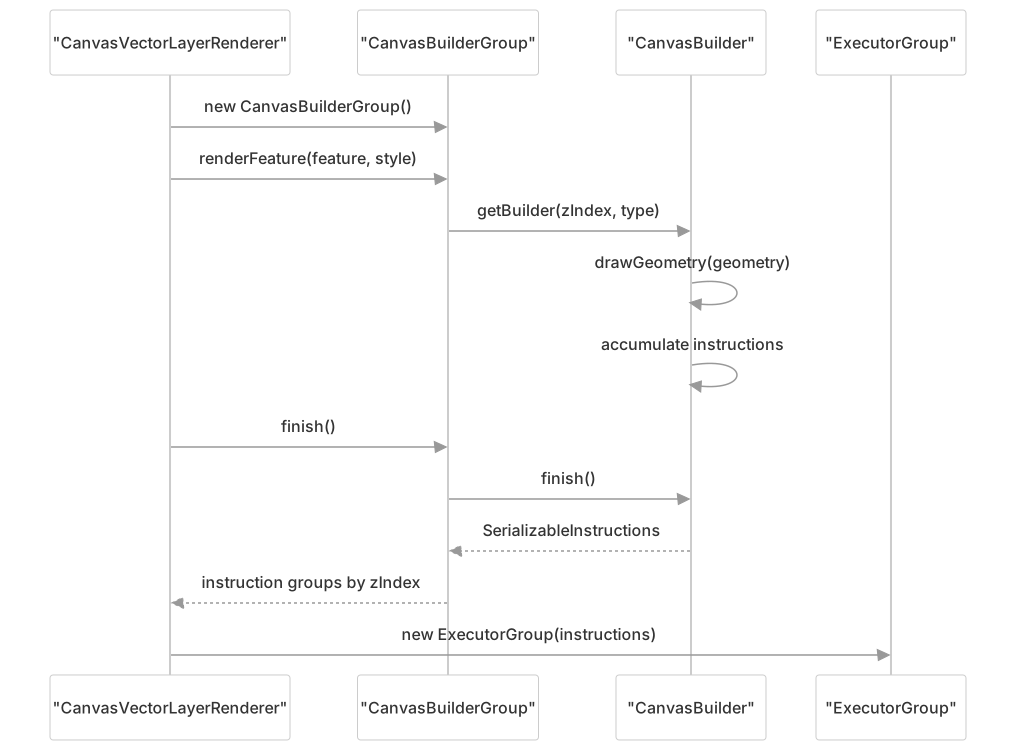
Builder Lifecycle
The builder pattern follows this sequence:
- Initialization:
CanvasBuilderGroupcreates builders for each geometry type - Feature Processing:
renderFeature()calls appropriate builder methods - Instruction Generation: Builders accumulate rendering instructions
- Finalization:
finish()returnsSerializableInstructions
Execution Pipeline
During frame rendering, the ExecutorGroup coordinates the execution of cached instructions to produce the final canvas output.
Execution Architecture

Key Execution Methods
| Method | Location | Purpose |
|---|---|---|
| execute() | ExecutorGroup | Coordinates execution across builders |
| execute_() | Executor | Executes instructions for specific geometry type |
| transform2D() | Geometry utilities | Transforms coordinates to pixel space |
| replayImageOrLabel_() | Executor | Renders images and text labels |
Layer-Specific Renderers
Different layer types use specialized canvas renderers that implement the instruction-based pipeline with layer-specific optimizations.
Vector Layer Rendering
CanvasVectorLayerRenderer handles feature-based layers:

Vector Tile Layer Rendering
CanvasVectorTileLayerRenderer extends tile rendering with vector features:

Performance Optimizations
The canvas pipeline includes several performance optimizations:
- Instruction Caching: Rendering instructions are cached and reused across frames
- Coordinate Transformation: Batch coordinate transformations for efficiency
- Z-Index Grouping: Instructions grouped by z-index for optimal draw order
- Hit Detection: Separate hit detection canvas for pixel-level feature detection
- Decluttering: Collision detection for text and symbol placement